

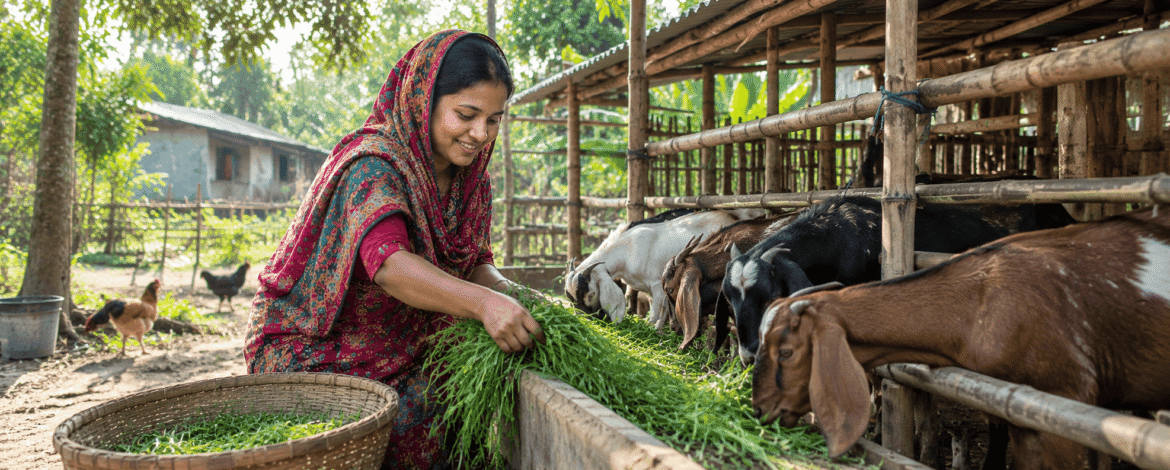
For many low-income families in Bangladesh, a small amount of capital can make a meaningful difference. It may help a farmer purchase agricultural supplies, enable a woman to establish a home-based business, or support a household in developing an additional source of income.
However, traditional financial services are not always accessible to people living in underserved communities.
This is where responsible microcredit and inclusive financial services can play an important role.
Understanding Microcredit
Microcredit refers to the provision of relatively small loans to individuals who may have limited access to conventional banking services.
These loans are often used to support income-generating activities such as small-scale farming, livestock rearing, tailoring, retail businesses, and other local enterprises.
Unlike traditional commercial lending, microcredit programs are frequently designed to address the circumstances of borrowers with limited financial resources.
How Microcredit Supports Economic Opportunities
1. Encouraging Small Entrepreneurship
Access to suitable financing can help individuals start or expand small businesses. For women managing household responsibilities, home-based enterprises may provide opportunities to earn an income while remaining connected to family life.
2. Supporting Rural Livelihoods
Agriculture and livestock farming remain important sources of income in many Bangladeshi communities. Appropriate financing can support productive investments in farming equipment, livestock, and agricultural inputs.
3. Promoting Women’s Economic Participation
When women have access to financial resources and relevant guidance, they may be better equipped to participate in economic activities and contribute to household financial decisions.
4. Strengthening Household Resilience
A stable income-generating activity can help families manage everyday expenses and prepare for unexpected financial difficulties.
Why Responsible Lending Matters
Microcredit is not a guaranteed solution to poverty. Loans create repayment obligations, and unsuitable borrowing can increase financial pressure on already vulnerable households.
Effective financial inclusion therefore requires responsible lending practices, transparent terms, realistic repayment schedules, and adequate borrower guidance.
Financial literacy is equally important. Understanding savings, budgeting, borrowing costs, and business planning can help individuals make more informed financial decisions.
Beyond Credit: The Importance of Awareness
Access to finance becomes more meaningful when combined with knowledge.
Community awareness programs can help participants understand responsible borrowing, household budgeting, entrepreneurship, and long-term financial planning.
This integrated approach recognizes that sustainable development depends not only on access to money but also on the ability to use financial resources effectively.
SWD’s Vision for Inclusive Financial Services
Social Women Development (SWD) recognizes financial inclusion as an important pathway toward women’s empowerment and poverty alleviation.
Our mission emphasizes inclusive financial opportunities, practical awareness, and community development that respond to the needs of underserved populations.
We believe that financial services should promote dignity, informed decision-making, and opportunities for sustainable livelihoods.
Building a More Inclusive Future
Financial inclusion is ultimately about giving people a fairer opportunity to participate in economic life.
When responsible financial services are combined with education, guidance, and community support, they can contribute to lasting economic and social progress.
Leave A Comment