

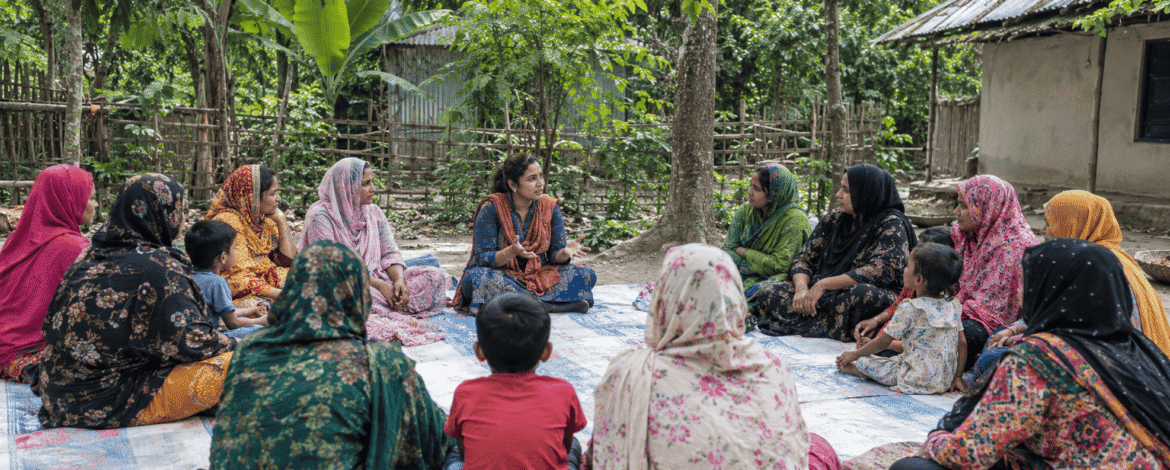
Sustainable community development requires more than financial resources. It also depends on education, awareness, participation, and the ability of individuals to make informed decisions about their lives.
In many underserved communities across Bangladesh, limited access to reliable information can prevent people from taking advantage of opportunities that could improve their well-being.
Community awareness initiatives help bridge this gap by connecting people with knowledge, practical guidance, and opportunities for collective progress.
The Role of Awareness in Community Development
Awareness programs encourage individuals to understand important social, economic, and personal issues affecting their everyday lives.
These initiatives may focus on financial literacy, women’s rights, health and hygiene, child education, environmental responsibility, and social well-being.
When people have access to relevant information, they are better positioned to make decisions that benefit themselves, their families, and their communities.
Five Areas Where Community Awareness Can Make a Difference
1. Financial Literacy and Responsible Money Management
Understanding budgeting, savings, borrowing, and household financial planning can help families make better financial decisions.
Financial literacy is particularly valuable for individuals starting small businesses or participating in microfinance programs.
2. Women’s Rights and Social Participation
Awareness initiatives can help women better understand their rights, recognize available opportunities, and participate more confidently in household and community decisions.
Encouraging women’s participation is an important step toward building more inclusive communities.
3. Health, Hygiene, and Family Well-Being
Knowledge about sanitation, nutrition, preventive healthcare, and personal hygiene can support healthier living conditions.
Community-based awareness activities can make this information more accessible to families who face barriers to formal services.
4. Education and Skills Development
Education creates opportunities for long-term social and economic progress.
Encouraging school participation, lifelong learning, and practical skills development can help individuals strengthen their capabilities and prepare for changing economic conditions.
5. Community Cooperation and Collective Responsibility
Sustainable progress often begins when community members work together.
Local participation can strengthen trust, encourage shared responsibility, and help communities identify practical solutions to common challenges.
Why Community Participation Matters
Development initiatives are more effective when communities are involved in identifying their own needs and priorities.
Rather than relying entirely on outside solutions, participatory approaches encourage local ownership and accountability.
Women, young people, community leaders, and underserved households all have valuable perspectives that should be considered when designing development initiatives.
Connecting Awareness With Economic Empowerment
Financial support and awareness initiatives can complement one another.
For example, a woman interested in starting a small enterprise may benefit from access to financing. But knowledge of budgeting, product pricing, market demand, and household financial planning can be equally important to the enterprise’s sustainability.
Combining economic opportunities with practical education helps address both immediate needs and longer-term development challenges.
SWD’s Approach to Community Development
At Social Women Development (SWD), we recognize that meaningful social progress requires both opportunity and awareness.
Our mission brings together women’s empowerment, inclusive financial services, poverty alleviation, and community development.
Through a focus on practical knowledge, social awareness, and inclusive participation, SWD aims to contribute to communities where individuals have greater opportunities to improve their lives.
Building Sustainable Change Together
Lasting development does not happen through a single initiative. It grows through continuous learning, participation, cooperation, and access to opportunity.
By investing in people as well as programs, communities can develop the knowledge and confidence needed to create positive change.
When individuals are informed, women are empowered, and communities work together, sustainable progress becomes possible.
Leave A Comment